
Liz Rogers Insurance

Making Finding Insurance More Colorful

  • Understanding What Insurance Is Required In Florida

    Understanding insurance in Florida is crucial for residents. With its unique climate, laws, and lifestyle, Floridians face specific risks that require tailored insurance solutions. Whether for your vehicle, home, or health, knowing the types of coverage available can help you make informed decisions.

    The Importance of Insurance in Florida Living

    Insurance plays a vital role in protecting assets and ensuring peace of mind. In Florida, residents experience hurricanes, floods, and other natural disasters. Having proper coverage safeguards financial stability against these unpredictable events.

    Additionally, Florida has a diverse population with varying needs. Young families, retirees, and seasonal residents all require different types of insurance. Each group needs to understand its specific requirements to effectively manage risks.

    Moreover, the legal landscape in Florida mandates certain types of insurance. This makes it even more important for residents to know what is necessary for compliance. Without adequate coverage, individuals may face significant penalties or financial hardships.

    Common Types of Insurance Required for Floridians

    Many Floridians need specific types of insurance to navigate daily life. Auto insurance is mandatory, ensuring that drivers are protected on the road. Additionally, homeowners’ insurance is essential for anyone owning property. This coverage helps protect against damage from storms and other disasters.

    In many cases, renters’ insurance also becomes vital. This type of insurance covers personal belongings in rental properties. Furthermore, it provides liability coverage in case of accidents. Many landlords require renters’ insurance before signing a lease.

    Health insurance is another critical component of overall coverage. Floridians need to understand their options, including employer-sponsored plans and marketplace offerings. Each option has its benefits and limitations, making it important to evaluate choices carefully.

    Understanding Auto Insurance Requirements in Florida

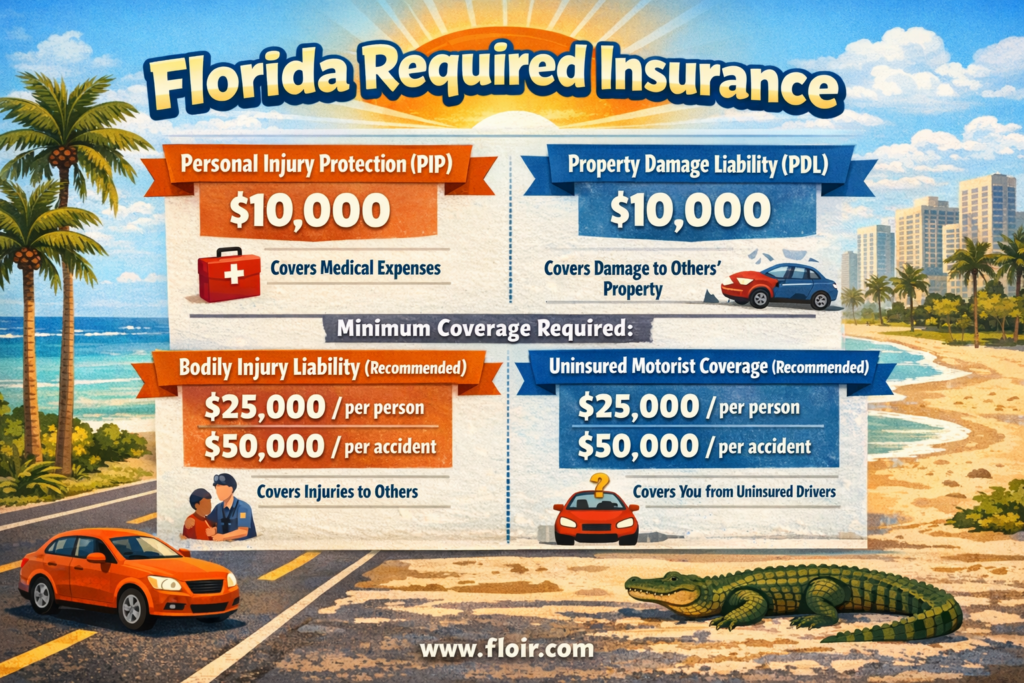
    Auto insurance is not just a good idea in Florida; it is a legal requirement. Residents must carry a minimum level of personal injury protection (PIP) and property damage liability (PDL). PIP covers medical expenses and lost wages after an accident, while PDL handles damages to other vehicles or property.

    Additionally, drivers must consider optional coverages like collision and comprehensive insurance. Collision covers damages to your own vehicle after an accident, whereas comprehensive protects against theft and natural disasters. While these options may not be mandatory, they provide essential peace of mind.

    Moreover, Florida’s no-fault insurance system can complicate matters. In this system, each driver’s insurance pays for their injuries regardless of fault. As a result, understanding your rights and obligations becomes crucial when filing claims after an accident.

    Homeowners Insurance: What You Need to Know

    Homeowners insurance protects your property and personal belongings against various risks. In Florida, where hurricanes and floods are common, having adequate coverage is vital. Most policies cover damage from storms, but flood insurance is often separate and necessary.

    Additionally, liability coverage is part of most homeowners’ policies. This protects against lawsuits for injuries occurring on your property. Understanding the limits of your policy ensures you won’t face financial challenges if an accident occurs.

    Moreover, many lenders require homeowners’ insurance to secure a mortgage. Without it, financing may not be possible. Therefore, knowing the types of coverage and ensuring adequate protection is essential for homeowners in Florida.

    Navigating Health Insurance Options in Florida

    Health insurance is crucial for maintaining well-being. In Florida, individuals have various options for coverage. Some may receive insurance through their employers, while others may purchase plans on the health insurance marketplace.

    The marketplace provides choices that cater to different budgets and needs. When selecting a plan, consider factors like premiums, deductibles, and covered services. Understanding these elements allows individuals to choose the best option for their healthcare needs.

    Additionally, special programs may assist low-income residents. Medicaid and the Children’s Health Insurance Program (CHIP) offer necessary support for eligible families. Exploring all available options ensures that Floridians have access to the care they need.

    Conclusion

    In conclusion, understanding insurance requirements in Florida is essential. From auto and homeowners insurance to health coverage, each type plays a critical role in financial security. Being informed allows residents to navigate risks and comply with legal requirements effectively. By evaluating personal needs and exploring options, Floridians can protect themselves and their assets. Taking proactive steps in securing insurance can lead to a more secure and stress-free life in the Sunshine State.

  • Understanding Florida No-Fault Insurance: A Comprehensive Guide

    Florida operates under a unique no-fault insurance system. This system aims to simplify the process of accident claims. Understanding how it functions can save drivers both time and money. In the following sections, readers will explore the mechanics of no-fault insurance, its benefits, and key coverage details. Additionally, common misconceptions will be addressed, along with information on navigating claims and legal options.

    What is Florida No-Fault Insurance and How Does It Work?

    Florida’s no-fault insurance system requires drivers to carry Personal Injury Protection (PIP) coverage. Under this system, each party involved in an accident seeks compensation from their own insurance company. This approach reduces the need for lengthy legal battles over fault. Consequently, it streamlines the process and helps get medical bills paid more quickly.

    Each driver must maintain a minimum PIP coverage of $10,000. This coverage pays for medical expenses, lost wages, and other related costs. Additionally, it applies regardless of who caused the accident. Therefore, even if a driver is at fault, their own insurance will cover their expenses up to the policy limit.

    Overall, Florida’s no-fault system aims to alleviate the financial burden on accident victims. It encourages quick medical assistance and reduces the need for extensive litigation. However, it does not cover property damage, which is addressed through separate coverage. Understanding this separation is crucial for all Florida drivers.

    Key Benefits of Florida No-Fault Insurance Explained Simply

    One significant benefit of Florida’s no-fault insurance is quicker access to medical care. Since drivers file claims with their own insurance providers, they often receive medical payments faster. This immediate access can be vital for recovery after an accident. Consequently, injured individuals can focus on healing rather than dealing with claims disputes.

    Another advantage is the reduction in legal complexities. Traditional liability insurance often leads to protracted legal battles over who is at fault. With no-fault insurance, these disputes become less common. This reduction in litigation lowers overall legal costs, benefiting both insurance companies and policyholders.

    Furthermore, the no-fault system promotes accountability among drivers. Since everyone must carry PIP coverage, there is an implicit incentive to drive safely. Knowing that medical expenses will be taken care of can lead to more responsible driving behaviors. Thus, the system not only aids in recovery but also fosters a safer driving environment.

    Understanding Personal Injury Protection (PIP) Coverage Basics

    Personal Injury Protection (PIP) is a key component of Florida’s no-fault insurance system. PIP covers medical expenses incurred as a result of an accident. It also compensates for lost wages, making it essential for those unable to work due to injuries. Understanding the specifics of PIP coverage helps drivers make informed decisions about their insurance needs.

    PIP coverage extends beyond just medical bills. It also covers rehabilitation costs and essential services that may arise due to injuries. For example, if a driver can no longer perform household tasks, PIP can help cover the costs of hiring assistance. This comprehensive coverage makes PIP a valuable asset for accident victims.

    However, policyholders must remember that PIP has limits. While the minimum requirement is $10,000, individuals can choose to purchase higher coverage. Additionally, only certain types of medical expenses are covered. Understanding these nuances can help drivers choose the right level of protection for their needs.

    Common Misconceptions About No-Fault Insurance in Florida

    Many people mistakenly believe that no-fault insurance eliminates the right to sue after an accident. While the system simplifies claims, it does not completely restrict legal action. Drivers can still pursue lawsuits if they suffer serious injuries or meet specific thresholds. However, understanding when it is appropriate to take legal action is essential.

    Another misconception involves the belief that no-fault insurance covers all damages. In reality, no-fault insurance primarily addresses personal injury costs, not property damage. Drivers must purchase separate liability coverage to protect against damages to other vehicles or property. This distinction is crucial for ensuring adequate protection.

    Finally, some individuals think that no-fault insurance applies to all types of accidents. In Florida, the no-fault system primarily concerns auto accidents. Other types of incidents, such as slips and falls, do not fall under this regulation. Knowing the limitations of no-fault insurance can help individuals better navigate their coverage options.

    Navigating Claims and Legal Options Under No-Fault Laws

    Navigating claims under Florida’s no-fault system can be straightforward, but it requires diligence. After an accident, the first step is to notify your insurance company. Providing accurate and timely information is crucial for a smooth claims process. Generally, insurers will request documentation such as medical records and police reports to support the claim.

    Once you file a claim, insurance companies must respond within a specific timeframe. They will review all submitted documentation and determine the appropriate compensation. If there are disputes regarding coverage or compensation amounts, policyholders may need to negotiate with the insurer. Having clear communication and documentation can facilitate a successful resolution.

    In cases of severe injuries, individuals may want to explore legal options. While the no-fault system limits suits, pursuing legal action remains possible if they do not meet specific thresholds. Consulting with a qualified attorney can help navigate these complexities. They can provide guidance on whether pursuing a lawsuit is advisable based on individual circumstances.

    Conclusion

    Florida’s no-fault insurance system can seem complex, yet it provides crucial benefits to drivers. Understanding the mechanics of this system helps individuals make better insurance choices. PIP coverage is vital for financial protection, while common misconceptions can lead to confusion. By navigating claims properly and knowing legal options, drivers can maximize their safety. Ultimately, being informed empowers Florida residents to drive with confidence, ensuring they are prepared for any unexpected situations on the road.

  • Florida Homeowners Insurance with Liz Rogers’ Insights

    Understanding homeowners insurance in Florida can be a complex task. With unique risks such as hurricanes and flooding, it is crucial to have adequate insurance coverage. Liz Rogers offers valuable insights to help navigate this intricate landscape.

    What You Need to Know About Florida Homeowners Insurance

    Florida homeowners insurance protects your home and belongings from various risks. Coverage typically includes damage from fire, theft, and certain natural disasters. However, Florida’s unique climate means additional factors to consider. For example, many policies do not automatically cover flood damage. Homeowners in Florida should be aware of this potential coverage gap.

    Furthermore, insurance rates in Florida can vary significantly. Factors such as location, home age, and construction type all play a role in determining premiums. Homeowners should also be aware that Florida has some of the highest insurance rates in the nation. Understanding these factors helps in selecting an appropriate policy for your needs.

    Additionally, the state requires homeowners to have certain minimum coverage levels. It is crucial to familiarize yourself with these requirements before purchasing a policy. Doing so can prevent financial strain in the event of a disaster. Partnering with a knowledgeable agent can simplify this process and ensure you meet all legal obligations.

    Insights from Liz Rogers on Coverage Options Available

    Liz Rogers emphasizes the importance of understanding the various coverage options available to Florida homeowners. Basic homeowners insurance typically includes coverage for dwelling, personal property, and liability. However, policyholders often overlook additional endorsements. These endorsements can enhance coverage for high-value items or specific risks associated with living in Florida.

    Moreover, flood insurance is a significant consideration in Florida. Standard homeowners policies usually do not cover flood damage. Therefore, Liz recommends assessing the need for a separate flood policy. By understanding these nuances, homeowners can effectively safeguard their investments.

    Another vital aspect is the distinction between replacement cost and actual cash value. Replacement cost covers the cost of rebuilding without depreciation. Conversely, actual cash value takes depreciation into account, which may result in lower payouts. Liz advises homeowners to consider their personal circumstances when choosing between these two options.

    Common Misconceptions About Florida Homeowners Insurance

    Many individuals hold misconceptions about Florida homeowners insurance. One common myth is that all natural disasters are covered under standard policies. Unfortunately, this is not true. Many homeowners remain unaware that coverage for specific events, like hurricanes or floods, often requires separate policies or endorsements.

    Another misconception involves the assumption that cheaper is better. While it may be tempting to save on premiums, inadequate coverage can lead to financial disaster. Liz strongly advises against sacrificing coverage for a lower price. Ultimately, understanding the balance between cost and coverage is essential for any homeowner.

    Finally, some believe that insurance companies cannot deny claims for natural disasters. Insurance companies have specific criteria for payouts, and homeowners must meet these requirements to receive compensation. Liz emphasizes the need for thorough documentation and a clear understanding of policy terms to avoid claim denials.

    Tips for Finding the Right Policy for Your Needs

    Finding the right homeowners insurance policy requires careful consideration and evaluation. Begin by assessing your unique needs and associated risks. For instance, if you live in a flood-prone area, securing flood insurance should be a priority. Engaging with an experienced insurance agent can help clarify these needs effectively.

    Additionally, comparing quotes from multiple providers can reveal significant price differences. While one provider may offer a lower premium, the coverage may not be adequate. Therefore, Liz suggests thoroughly assessing the terms and conditions of each policy.

    Another helpful tip is to inquire about discounts. Many insurance companies offer discounts for bundling policies, home security systems, or maintaining a claims-free record. Taking advantage of these offers can help homeowners save money while still ensuring robust coverage.

    Navigating Claims: Liz Rogers’ Expert Advice and Insights

    Navigating the claims process can be daunting for many homeowners. Liz Rogers emphasizes the importance of documenting everything. Taking photos of the damage and keeping records of your communication with the insurance provider is essential. This documentation can support your claim and significantly expedite the process.

    Furthermore, understanding your policy coverage helps mitigate confusion during the claims process. Familiarize yourself with the specific terms of your policy to avoid any confusion. Knowing what is covered can prevent misunderstandings and frustration when filing a claim.

    Finally, Liz advises homeowners to remain proactive and persistent. Insurance companies may sometimes delay or deny claims, making it essential to follow up regularly. If you encounter difficulties, seeking help from a public adjuster or legal expert can provide additional support. Being informed and prepared strengthens your chances of a successful claim.

    Conclusion

    In conclusion, understanding Florida homeowners insurance is vital for protecting your home and investments. Liz Rogers’ insights highlight the unique aspects of coverage in this state. Homeowners must navigate complex policies, misconceptions, and claims processes to secure adequate protection.

    By staying informed and seeking expert advice, homeowners can make more informed decisions. Additionally, considering personal needs and risks helps in selecting the right policy. Being proactive and documenting important information further strengthens your insurance strategy. Ultimately, ensuring your home is well-protected can provide peace of mind during challenging times.